



By the early 1990s, Duran Duran’s career appeared to be in decline. Their 1990 album Liberty, despite debuting at number eight in the UK Albums Chart, quickly fell out of favour, struggling commercially and critically in both the UK and the US. Singles such as “Violence of Summer (Love’s Taking Over)” and “Serious” failed to make significant chart impacts, while much of the album’s material was met with indifference or outright criticism from the press. Reflecting on this period, band members Nick Rhodes and Simon Le Bon admitted to a lack of focus during the creation of Liberty, with Le Bon noting, “There were times when everyone in the band felt like giving up.”
After the commercial disappointment of Liberty, the drummer Sterling Campbell departed from Duran Duran and later joined Soul Asylum. The remaining four members faced uncertainty over whether they would continue as a group: the bassist John Taylor was facing personal difficulties, Rhodes was going through a marital separation while caring for his young child, and Le Bon expressed a desire to escape to a quieter life by the sea. According to Malins, this left the guitarist Warren Cuccurullo to take control. Cuccurullo later said:
I was the hungriest, I wanted success, I wanted to go beyond where I had gone. The band had a heart trans-plant. I’m not saying the others weren’t motivated, but I didn’t have any family to distract me. All I had was my music and I am quite an extreme boy.
Following a period under the management of Peter Rudge, Duran Duran began managing its own affairs. The band later met with Rupert Perry, president of EMI Records, to discuss their concerns about the group’s status. Taylor recalled that Perry advised the group to “Just take your time. There’s no rush. Just make the right album.” Taylor later said that he missed having deadlines, reflecting that “Maybe we could have done an even better job if [Rupert] had said, ‘We need it in eight weeks. Better get your skates on, guys.’ Artists don’t do well with time on their hands; that is my experience. All creative projects have their own energy, which is not infinite. Deadlines are what I need, otherwise I get lazy and start taking days off and loafing around on South Molton Street.”
The band’s label, Capitol-EMI, agreed to an advance for the new album but, according to Taylor, placed greater financial oversight on the project after the band had spent heavily on previous albums without achieving commercial success. Rather than providing the usual six-figure advance, the label gave the band a limited amount of money and approved additional funding based on the material they presented. Nick Gatfield, the label’s head of A&R in London at the time, monitored the group’s progress; Taylor recalled that Gatfield said he would review the band’s songwriting on a monthly basis and release the next month’s stipend if he was satisfied with what he heard. Taylor later described it as the first Duran Duran album to be “tightly A&R’d”. Taylor: “Cuccurullo also agreed to be the interface with Nick Gatfield, go over the bills and play him the fruits of our labors. I was grateful to him for taking on that role.”
Cuccurullo had taken over a terraced house at 24 Octavia Street in Battersea, which had previously been occupied by Le Bon and his wife Yasmin Le Bon during construction work on their Chelsea home, and offered to install a studio in the back room where the band could write and record new material. Taylor recalled that the arrangement would be “cheap and effective”; a home studio allowed the band freedom to experiment without the constraints of deadlines or the expense of studio time. Cuccurullo transformed the living room into a studio and invited Rhodes to consider the idea of recording the entire album there, which Rhodes approved of, joking that the décor was preferable to many professional studios because there was not “a piece of glass in between us and some horrible plastic plants”.
Duran Duran relocated to Cuccurullo’s home studio, called Privacy, and set up equipment to write and record their next album. It was a more modest setting compared with the expensive and distant locations used for some of the band’s previous albums.
Taylor later credited Cuccurullo with helping keep the album on track, saying that he maintained a close watch over the recording sessions, overdubs, mixes, and expenses throughout the project.
Development and recording
[edit]
The album began to take shape at Privacy with the band working on headphones to avoid disturbing Cuccurullo’s South London neighbours. According to Cuccurullo, the group used several Yamaha DMP7 digital mixing consoles that could be digitally cascaded and routed directly into a headphone amplifier. This allowed the keyboard system to be placed in one channel, drum machine material in another, and guitars and vocals in a third, enabling the band to play without disturbing the neighbours. Taylor later said that he was unaware of any complaints from neighbours during the recording sessions, adding that Cuccurullo “could certainly charm those South Londoners”. However, groups of the band’s fans would sometimes upset neighbours by gathering outside Cuccurullo’s home, with Cuccurullo recalling that police had been called to the house a few times.
According to Cuccurullo, Gatfield would visit the sessions “like every three weeks and say, ‘Hey, I hear another hit.'” Gatfield responded positively to “Ordinary World”, one of the first ideas that the band worked on. His approval of the song led to further funding, which made the band happy. Taylor compared the process to a game show, and that the label’s reaction to the song—”OK, great, we’ve got ourselves a hit”—was “the first time we’d had that interaction with a label.”
The band spent nearly six months in preproduction. According to Cuccurullo, the writing took about three months, beginning in late January 1991. During this period, the band “wrote and wrote and wrote, day after day,” as recalled by Rhodes, although some days produced interesting ideas while others did not. Between January and April 1991, the group generated an album’s worth of material. Le Bon later said that they had finally found “a rhythm of working and an attitude” that the band had been aiming for since 1985.

A couple of months after the band began writing in January, John Jones joined the project and began demoing some of the ideas they had developed. Rhodes later said of Jones: “he was a great ‘ear’ to have around. He had a great knowledge of classical structure of songs. With what we were trying to do, he was the right inspiration to have around. he helped steer some of the songs and generally contributed a good sense of direction for the album’s arrangement.” Jones had a prior history with the band, having first collaborated with them on the B-side “This Is How a Road Gets Made”, released with the Big Thing (1988) single “Do You Believe in Shame?”. Jones recalled that the band wanted both creative freedom and a way to avoid the expense of a traditional studio, so they asked if recording in a living room was possible. Jones replied that it was, and that they could at least begin with demos to see how far the process could go. The primary aim was to demo about 15 songs for presentation to Capitol and obtain feedback, with the focus placed on the songs themselves rather than on perfecting sounds.
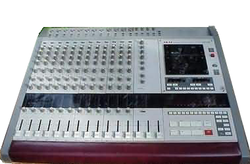
By mid-April 1991, the band had begun demoing material using an Akai MG1214 mixing console with a built-in analogue 12-track recorder. The band played together live, with everyone initially being equipped with a Shure SM58 microphone through which they could sing or communicate. After two days of work on the analogue recorder, the group concluded that the project could be completed at Privacy if they obtained a suitable mixing desk and digital tape machines. Following early work on “Ordinary World” and three other songs, the band awaited the arrival of two Akai ADAM (Akai Digital Audio Multitrack) digital 12-track recorders and a DDA DMR12 console. When the first Akai ADAM digital recorder arrived, recording continued in 12-channel mode using the MG1214 and the digital machine, while the second recorder followed several weeks later. Over the next three months, from April to July 1991, the band assembled 14 tracks that they considered the strongest, all of which were demoed during this period.
The band’s demo recordings were made on the two Akai digital 12-track machines so that the basic tracks could be retained when recording the final album. Cuccurullo said, “When these digital machines became available, we knew since we had an engineer working with us—John Jones […]—that if we rented a desk and if we had these machines we would have master-quality performances to go with it. So whether we were laying down a guitar part or a vocal, we knew at that point that they could be keepers.” According to Le Bon, the group wanted a setup that would allow the demo recordings to be used as part of the finished product because of previous occasions when they felt that the demos had been stronger than subsequent versions of the songs.

After the demoing process, the band moved into recording the album. The album’s liner notes state that all of the songs were recorded on the Akai ADAM digital recorders through the DDA DMR12 desk. By the time Le Bon recorded the lead vocal for “Ordinary World”, the DDA DMR12 desk had been installed. Cuccurullo described the DDA DM Mach 12 as a console designed with the Akai digital 12-track machine in mind and suited to the professional home-studio environment. Jesse Nash of Billboard noted that although much of the album was acoustic, technology played a major role in the recording process. Le Bon later recalled that the band was “standing on the edge of a technological revolution” and that, for the first time in their career, they recorded directly to a hard drive.
Le Bon’s vocals were recorded using a Calrec Soundfield microphone, which was acquired during the demoing process. Jones described it as an all-purpose microphone that seemed well suited to the recording environment, while Cuccurullo noted that its control unit allowed users to simulate different microphone distances without changing position. Jones later praised the Soundfield microphone’s flexibility, recalling that the group enjoyed “zooming in” and changing the perspective of the recordings. Le Bon often recorded lead vocals while standing in the middle of the room while the other members sat around him wearing headphones. According to Jones, spontaneous contributions were sometimes incorporated into the recordings, including clapping and additional vocals. Meanwhile, Le Bon used a Psion Organiser to store completed lyrics and print them out for vocal sessions.
Le Bon noted that the band had become more willing to leave rough edges in their music rather than clean them up or re-record them. One example was “Sin of the City”, whose closing minutes originated from an impromptu jam after a drum-machine program “slipped out of gear”. Taylor recalled that he and Cuccurullo continued playing in a different key before gradually stopping one by one as the drum program ran out. After listening back to the performance, the band decided to keep it and mix it through to the end of the song. Le Bon later said that there were many similarly rough moments on the album that the group would previously have cleaned up or completely redone but chose to leave intact because they felt they worked. Taylor remarked, “We actually second-guessed ourselves a lot less on this record.”
After a week’s break and several attempts to mix tracks on the DDA DMR12 console, Jones and the band decided that a professional studio would be preferable. Around the same time, live drums were commissioned for “Ordinary World” and a couple of other songs and were recorded within a few hours at Maison Rouge Studios in Southwest London by the drummer Steve Ferrone and the engineer Tony Taverner. The album’s liner notes credit Ferrone with drums on “Ordinary World” and “Too Much Information” and percussion on “None of the Above”. According to Cuccurullo, the studio was chosen because of its drum room, and live drums were used only on tracks that the band felt required a human touch. He cited “Ordinary World” as one such song, while noting that other tracks relied entirely on programmed drums and that the two approaches were never combined on the same track. Jones later stated that the real drums gave the songs additional depth. At Maison Rouge, Rhodes and Jones also perfected the string and keyboard parts for “Ordinary World” and made further amendments to the drums and acoustic guitar; additional overdubs were recorded at Maison Rouge and Matrix Studios in London.
In May 1992, Le Bon sustained an injury in a motorcycle accident in Dyfed, Wales. Rhodes recalled being horrified by the incident. During this time, the band explored additional recording ideas, including a cover of the Velvet Underground’s “Femme Fatale”, reportedly suggested by Frank Zappa through his friendship with Cuccurullo. The song was recorded in a grand, echoey style and was ultimately included on the album. “Come Undone” was another late addition, conceived and recorded after Duran Duran was already complete in mid-1992. The song stands out as the only track on the album to which Taylor didn’t contribute bass, as he already went home to Los Angeles.
Mixing of “Ordinary World” was initially attempted by Steve MacMillion in the United States, Jones and Dee Long in the United Kingdom, and David Richards in Switzerland, although none of the versions were considered entirely satisfactory. David Leonard was subsequently brought in, with Jones later recalling that he did “a fantastic job,” and his mix was cut at Townhouse Studios. However, while in London for the Freddie Mercury Tribute Concert, Richards heard Leonard’s work and decided to create another mix of the song, which the band ultimately preferred for its commercial release. Richards went on to mix the majority of the album, in which Taylor suggested him to do some mixes. Cuccurullo later described receiving Richards’ mixes from his Montreux studio as one of his most memorable moments from the project, saying that Richards made the recordings sound “like you’d taken drugs before having a listen,” while Taylor praised his mixes. Richards mixed all but three tracks: Leonard mixed “Drowning Man” and “None of the Above”, while Duran Duran and Jones mixed “Shotgun”.
Background and release
[edit]
Portishead recorded a cover of Abba’s “SOS” for the 2015 film High-Rise, directed by Ben Wheatley. The contribution was announced on the band’s official website on October 8, 2015, and marked their first new recording since the 2009 charity single “Chase the Tear”. Although not an original composition, the track represented the group’s first studio release in six years, following several earlier indications that they were working on new material. Wheatley explained that Portishead’s involvement came about through social media. After seeing the band perform at Glastonbury and expressing admiration for them, Wheatley noticed that the Portishead member Geoff Barrow had commented positively about Wheatley’s previous film, A Field in England (2013). Discovering that Barrow was following him on Twitter, Wheatley contacted him directly, initiating the collaboration. He noted that such an exchange would have been far more difficult before the rise of social media.
High-Rise features two versions of “SOS”: one recorded by Portishead and another arranged by the film’s composer, Clint Mansell. Wheatley described the use of the song as a “cultural echo, where you hear something and then you hear it again in a different context… By the time you get to the second playing of it, everything’s broken down and the actual lyrics were speaking directly to the movie.” Mansell explained that his version emerged from a stylized party setting with string arrangements, while the later Portishead rendition introduces a marked shift in tone, serving as what he described as a sonic representation of the system’s degradation within the narrative.
