


[Guest blog by Rick Kuplinski, Facilitator, Henderson NV]
Cost-Benefit Analysis (CBA) is a SMART Recovery tool with game-changing power when it comes to building motivation and harvesting useful information to guide one’s recovery from addictive behavior. It is such a consequential aspect of participating in SMART Recovery that the CBA is the subject of three of these essays: 1. A previous one on using the CBA to dispute perceived benefits of an addictive behavior; 2. The one after that on fully considering the costs; and 3. Now this one on the bottom two sections of the CBA that are used to contemplate the desired benefits of changing an addictive behavior and the potential costs to be considered when doing so.
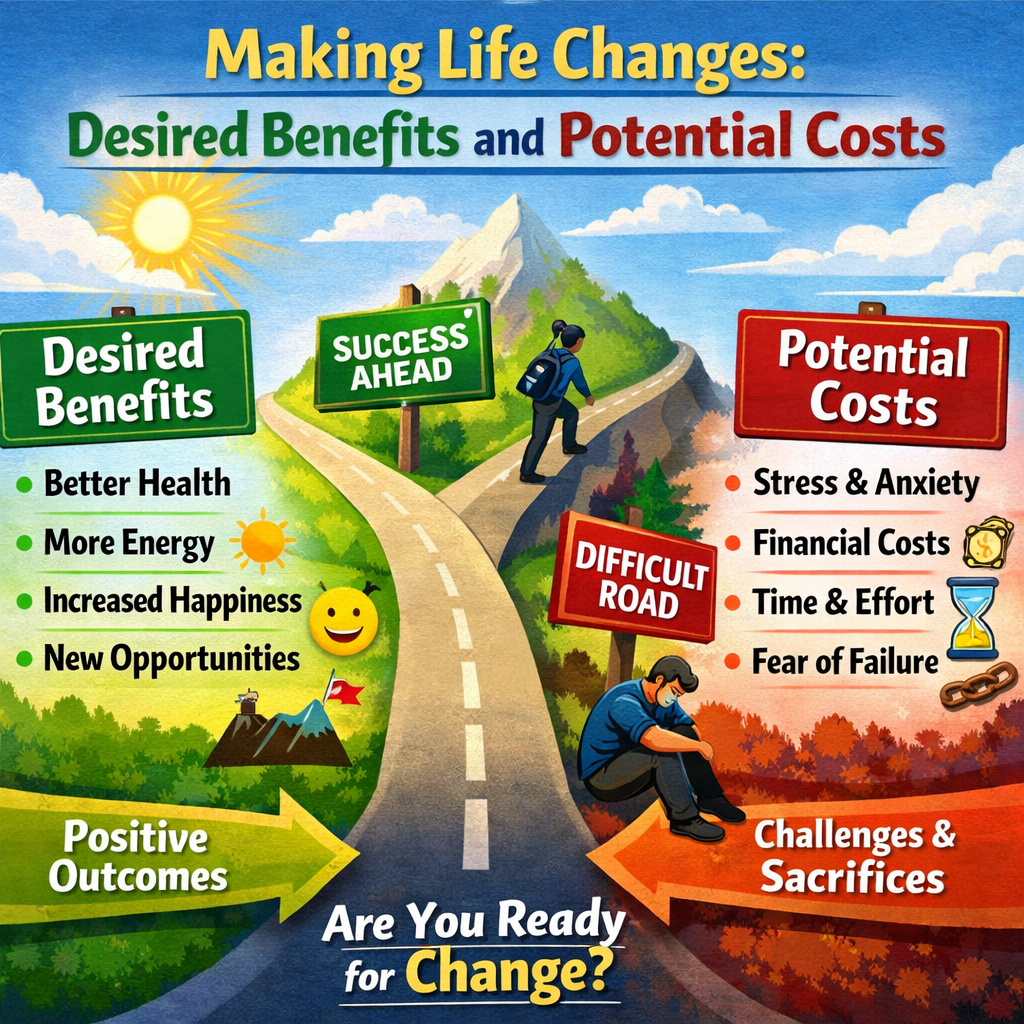
First, let’s talk about the benefits we hope to experience when we don’t engage in our behavior of concern, i.e., NOT drinking, using, or doing. (This is the bottom left quadrant on the four-paned CBA worksheet.) Very often people who are new to the CBA find this an easy section to complete because it can be as simple as reflecting on what would be the opposite of what we’ve already recorded in the section on the costs of drinking, using or doing. It’s like the old joke about what happens when you play a country music ballad backwards . . . it stops raining in Memphis, estranged lovers reconcile, Old Blue the dog comes back to life, etc. It is helpful to focus on reversing the effects of our addiction in areas such as physical and emotional health, relationships with other people, finances, and legal issues, to name some common costs. But we also can maximize the impact of this section by considering the following:
- Set reasonable expectations — It is good to have high hopes for life beyond addiction, and it is highly motivating to consider the possibilities. Still . . . Let’s not set ourselves up for possible disappointment by unrealistically imagining that all the benefits can be accomplished all at once or as soon as we would like. A good example here is repairing relationships damaged by addiction. Another is making improvements in one’s physical or mental health. These are worthy benefits to pursue in recovery, but it is going to take considerable time and effort to achieve them. So, when we record items like this on our CBA, it is important that we do so with clarity about the work that lies ahead.
- Make plans that go beyond merely stopping or reducing the harm of drinking, using or doing – When we look at our list of benefits we hope to achieve beyond addiction, it usually becomes obvious that many of these things won’t happen automatically by abstaining, moderating, or reducing the harm of our addiction. Take me, for example. I’ve always struggled to shed extra pounds and thought that giving up alcohol calories might be my magical solution. I soon realized, however, that it would not be enough. I needed to eat better, move by body more, and even use SMART Recovery to dispute some of my unhelpful beliefs about diet and exercise. Each of these things required some more thought than simply writing “lose weight” on my CBA. The SMART Recovery Change Plan Worksheet can help us craft more specific and measurable plans to put our good intentions into action. This is also true for things heavier than my weight concerns. It also applies to emotional challenges like stress, sadness, and boredom for which my addiction provided temporary relief. Completing this section of the CBA is a good time to begin exploring how to deal with these conditions more effectively.
- Use personal values to clarify direction –– If you’ve already completed the SMART Recovery Tool called Define Your Values (a.k.a. The Hierarchy of Values or HOV for short), then you’ve already taken stock of what you consider to be the most important things in your life; the things you hope are reflected in how you live it. Reflecting on these values might help you more thoroughly consider the list of benefits you hope to experience in recovery. For example, many people identify “being trustworthy” or “having integrity” as a value. So, what does that mean for life beyond addiction? What impact would it make to live life truer to that value? How does it relate to other things already on your list of benefits in this section of the CBA, like restoring personal health, rebuilding damaged relationships, becoming more financially secure, or overcoming legal challenges? What do these values suggest about how to go about doing these things? Your values also might remind you of the “opportunity costs” that often come with addiction. For example, I consider “continual personal growth” as a value. Thinking about this led me to reflect on how my misuse of alcohol compromised living by this value and to my adding to my list of benefits the idea of once again embracing opportunities to learn new skills and experience new things. You, too, might find that your HOV suggests areas where you want to take advantage of the opportunity to make a fresh start on things important to you.
Now, let’s turn our attention to the potential costs of NOT drinking, using or doing addictive behavior. (This is the bottom right quadrant on the four-paned CBA worksheet.) There are potential downsides to making any major change in our lives. It is okay to have a healthy degree of worry about the things in recovery that we think we might not like or might trip us up along the way. Often what people record in this section of the CBA relates to three things: 1. the fear of missing out on the benefits of our addiction we’ve already recorded in that section of the CBA; 2. the challenge of figuring out what to do about all the people, places and things we associate with our addiction; and 3. the uncertainty over how to deal with the thoughts and emotional challenges that often trigger us to drink, use, or do our addictive behavior of concern. As in other sections of the CBA, it is wise to be as honest, thorough, and specific about these things. But at the same time . . .
- Don’t “awfulize” – Approach your list of costs as potential costs and avoid imagining that dealing with any of them is going to be bad as it can possibly be. Doing so can lead to negative emotions and attitudes that can be self-defeating.
- Dispute unhelpful beliefs associated with the costs – Catch, check, and change beliefs associated with these costs that are not necessarily true, logical, or conducive to making the positive changes you’ve contemplated in the previous section of the CBA. See the SMART Recovery tool “Disputing Unhelpful Beliefs” for more guidance on this point.
- Know where hypervigilance is in order and plan appropriately — “Everyone has a plan until they get punched in the mouth.” This quote from boxer Mike Tyson is a reminder that our recovery plans will face challenges related to these potential costs and that our dealing with them should be a continuous and flexible process, especially when reality deviates from the plan. So, let’s ask ourselves: Of all these potential costs, which ones do I most need to protect myself against and how will I fight back if they lay a glove on me? Doing so will help us use this section of the CBA to guard against setbacks that could lead to recurrence (a.k.a. relapse) or to abandoning our change plans altogether.
So now we conclude this three-part series on using the Cost-Benefit Analysis. May the CBA be an impactful part of your experience using the tools of SMART Recovery as it has been for mine.
To find an online or in-person SMART meeting, visit HERE
