


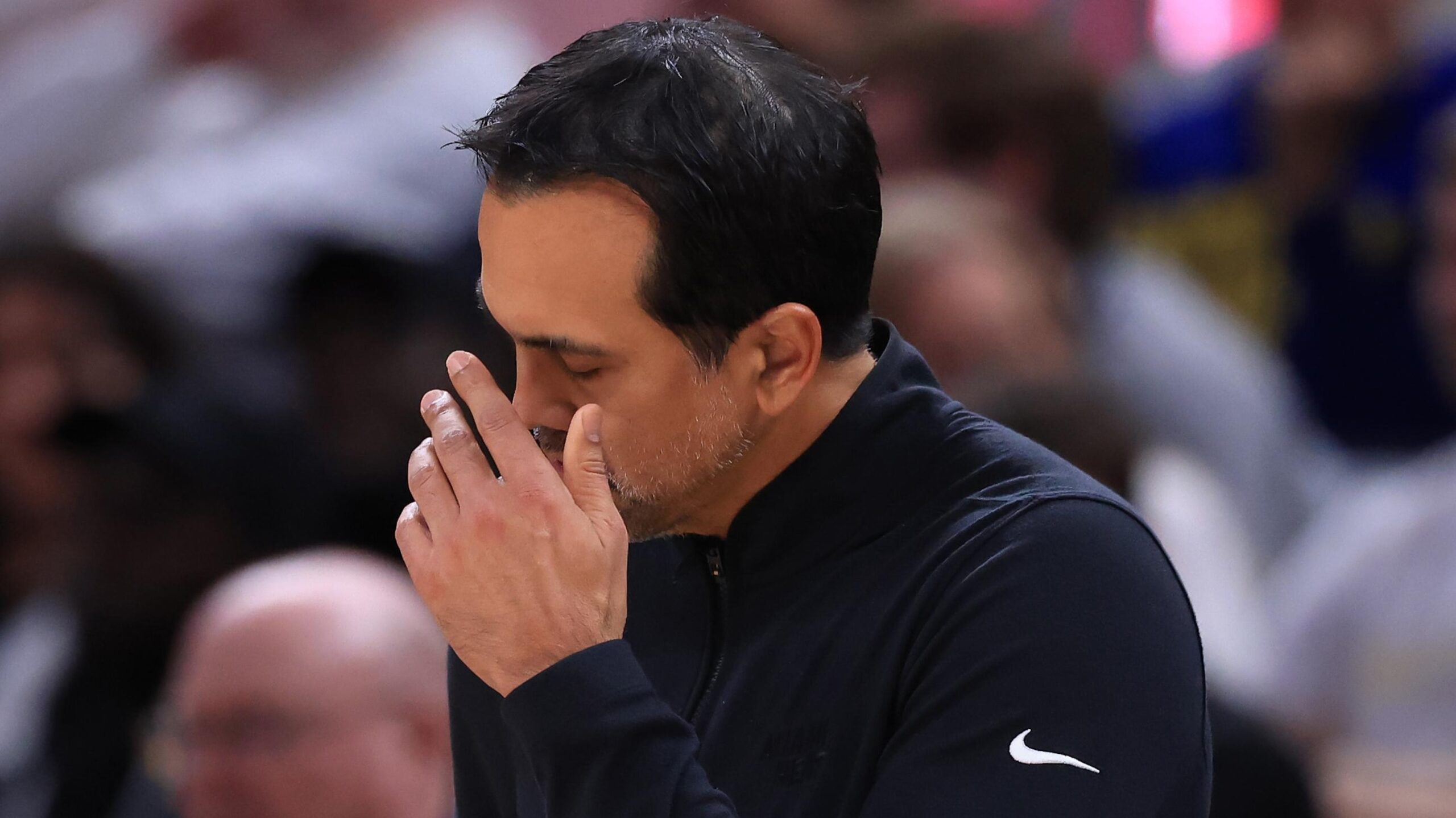
With the Miami Heat once again treading water in the heart of the Eastern Conference playoff picture, the 2026 NBA trade deadline loomed as a fortune-changing life raft.
Or that was the idea, anyway.
The trade waters looked plenty deep with Pat Riley-approved whales, from trademark restoration projects, like Ja Morant or Anthony Davis, to their (and others’) proverbial white whale, Giannis Antetokounmpo. With the right transaction or two, Miami seemingly had a chance to capitalize on the conference’s weakened state and perhaps even conquered it.
And then *crickets*. No needle-movers, no niche role-fillers, no present upgrades, no future assets. No salary-dumps, and no salaries dumped.
No nothing. Just eerie, stale silence amid the sea of activity around them.
Status quo from a club that has to know status quo isn’t cutting it. Like not merely logging miles on the treadmill of mediocrity, but clearing a spot for it in the basement and throwing a big screen in front of it to help pass the time during an extended stay.
It’s like they watched the Chicago Bulls finally jump off of that treadmill (maybe, mercifully, for real this time) and then scoffed at Chicago’s lack of endurance.
It is, in harrowing, unminced words, a failure on all fronts by this franchise. A time when no move at all absolutely was the wrong move to make.
And, yes, this silent acceptance of monotonous mediocrity makes Miami the biggest loser of trade season. Full stop.
Look, we can (and should) all point and laugh at clubs like the Sacramento Kings and Orlando Magic for giving up assets to get off of players they themselves signed months ago. Just like we can wonder what exactly the Washington Wizards think the sum of Trae Young, Anthony Davis and a slew of young players is supposed to equate to?
And, absolutely, we can shake our collective head in disbelief at how the Golden State Warriors so thoroughly torpedoed the trade value Jonathan Kuminga theoretically once possessed.
You know what, though? The Kings and Magic at least did something to address their self-inflicted wounds. So long as the Wizards’ moves don’t mess up their tank, maybe they just found an interesting way to accelerate their maturation. And Kristaps Porziņģis should have some value for the Warriors, either with his unicorn blend of shot-blocking and floor-spacing (if he ever stays healthy) or at least through his expiring $30.7 million salary.
The Heat, on the other hand, decided they’re just OK with staring down the barrel of a fourth consecutive Play-In Tournament trip? Are they really that convinced that Giannis Antetokounmpo, who publicly proclaims his loyalty to Milwaukee just about every time he’s given the chance (albeit with the caveat of wanting to win), will suddenly change his tune this summer?
At what point do you stop waiting for the exit of someone who just asked The Athletic’s Eric Nehm, “On what planet, on what Earth, would somebody want to leave this?” Even with major question marks surrounding Milwaukee’s ability to build a winner around Antetokounmpo, that’s still a sobering quote to swallow.
If this inactivity can all be chalked up to wanting to be prepared for the next round of Giannis speculation, then why not use this deadline to accumulate more assets to improve the eventual trade offer? Miami’s deadline pitch—built around Kel’el Ware, Tyler Herro, Terry Rozier’s expiring contract, two future firsts and possibly three future first-round swaps, per Barry Jackson of the Miami Herald—clearly couldn’t make Milwaukee bite, so why not up the temptation?
Is it really essential to have Andrew Wiggins around for the Play-In? Because it’s easy to think of a number of contenders who could’ve used a big, two-way wing with championship experience. Are the Heat ready to pony up for Norman Powell’s next contract? Because otherwise they just missed their chance to maximize the benefit from his All-Star emergence.
Look up and down the roster, and you’ll find viable trade candidates who could have returned assets of real value. The Heat are basically already outfitted to complement a championship-caliber superstar; they just can’t ever get their hands on one.
Clearly, they believe (or at least hope) their luck will change soon, but there are opportunity costs with all of this waiting. Oh, and the dubious distinction of being crowned the 2026 deadline’s biggest loser.
