


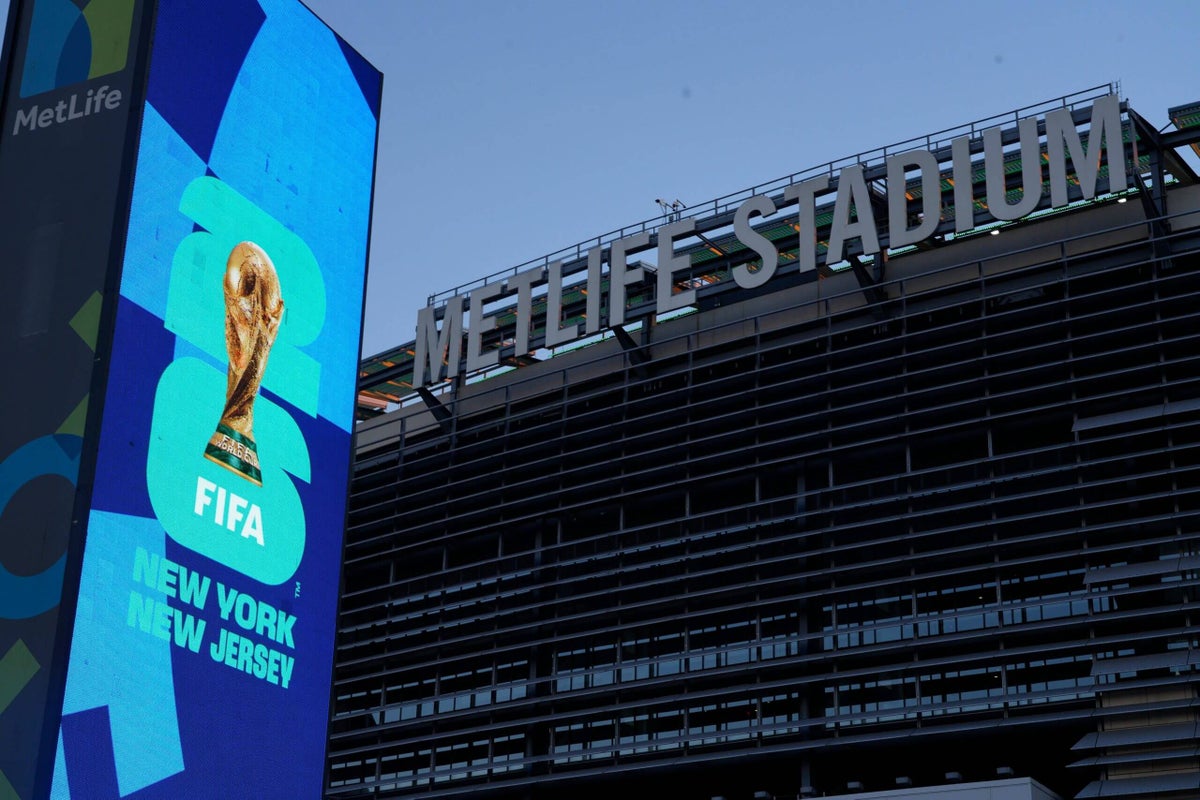
The 2026 World Cup draw is behind us, and the 16 host cities across the United States, Mexico and Canada now know which nations they will welcome next year.
For organizers in these cities, preparing for the World Cup has felt like a marathon, with nearly a decade of planning to get here. Now, they brace for that final sprint.
“This is probably the biggest day since we were awarded the final and will probably be the biggest day until our first match,” Alex Lasry, CEO of the New York New Jersey host committee, told The Athletic on the morning of the draw in Times Square. Knowing where teams are playing, he said, “is going to allow us to make that next sprint to get fully ready for the World Cup in June.”
For New Jersey, the draw yielded some dream scenarios: a juggernaut like Brazil as MetLife Stadium’s World Cup opener, and some of the biggest stars in France’s Kylian Mbappé and Norway’s Erling Haaland gracing East Rutherford in the group stage.
But not all cities were so lucky. Ticket prices in places like Atlanta and the San Francisco Bay Area dropped slightly in the days following the draw, a potential reflection of fans’ limited interest in some of the nations that will be competing there.
The Athletic rounded up which cities got the best results – and which one drew the short stick following the intricate creation of the match schedule.
Which host city had the best World Cup draw?
New Jersey and New York have been celebrating ever since FIFA president Gianni Infantino announced last year that MetLife would host the World Cup final. Now, the city has even more to be thankful for due to the nations it is guaranteed to host during the group stage.
Brazil, the nation with the most World Cup trophies (five), will open its tournament at MetLife against 2022 semifinalist Morocco, currently ranked by FIFA as the best African nation in the world. The two will feature on June 13 at 6 p.m. ET in what has the makings of a sellout crowd. This past year, Brazilian clubs Fluminense and Palmeiras played at MetLife during the FIFA Club World Cup, drawing large swathes of local Brazilians and providing some of the most memorable scenes of the tournament.
The venue is also hosting France and Norway and their aforementioned individual global stars. Each team faces Senegal, another top African foe, who will be in the U.S. prior to the World Cup to face the USMNT in a May 31 friendly in Charlotte.
Let’s not forget the ideal matchup for the area, which is Germany vs. Ecuador. The European giant is sure to attract casual football fans wherever it goes – but for Ecuadorian Americans in New York and New Jersey, this is a dream moment. According to 2021 figures from the Pew Research Center, an estimated 830,000 Hispanics with Ecuadorian descent live in the United States, with a collective 53% of that population concentrated in those two states.
An England-Panama finale for the group stage is also a win for the market. England’s roster will be composed largely of players from the English Premier League, which has a significant hold on the football-loving market in the United States.
Who were some of the other winners?
Some cities won by being guaranteed some of the biggest matches of the group stage.
Fans in Boston will have the chance to close out the group stage with a dance between France and Norway, which will be billed everywhere as Mbappé vs. Haaland – a showdown between two of the world’s most dominant forwards. This fixture is a marketer and football fan’s dream and has the potential to be talked about for years to come. The final matches of the group stage always carry an X factor, as some nations’ fates beyond the group stage will be determined on June 26 and June 27.
Kylian Mbappé and Erling Haaland will go head-to-head on the World Cup stage in Massachusetts. (Michael Regan / Getty Images)
Miami is hosting arguably one of the biggest matches of the tournament on the final matchday of the group stage, with Portugal-Colombia. Cristiano Ronaldo will draw wherever he goes – even in Miami, the land of Lionel Messi – but, on the off chance that Portugal has a dismal group-stage showing, this could also wind up being his last World Cup game ever. Then, there’s Colombia, which is guaranteed to draw some of the largest crowds of the tournament. The Pew Research Center estimated 1.4 million Hispanics of Colombian origin were living in the United States in 2021. They are considered the largest South American group living in the U.S. – plus, Colombian fans traditionally travel well to support their national team.
Some cities were lucky to have been matched with some of the biggest nations in the competition, guaranteeing large crowds in their markets. The reigning World Cup champion, Argentina, will open the tournament in Kansas City, the smallest host city. It was a major win for the region, as Messi will enjoy his 2026 World Cup debut at Arrowhead Stadium, home of the Kansas City Chiefs. Argentina will play its two other matches of the group stage outside Dallas, at AT&T Stadium, another mecca of American football.
That area also drew other major footballing nations, with the Netherlands, England, Croatia and Japan all scheduled to play at AT&T Stadium in the group stage. While the city lost out on hosting the World Cup final (it still landed a semifinal), hosting some of the biggest teams from around the world, as well as being the site of FIFA’s international broadcast center, are still significant wins for the Texan city.
Drawing a host nation is an automatic win
Any city hosting their respective home team automatically won the World Cup lottery.
The United States will be playing in Los Angeles and Seattle. The team’s opener against Paraguay at SoFi Stadium will surely draw a historic turnout. The team’s return to the L.A.-area venue just 13 days later vs. a to-be-determined European qualifier could also bring with it some drama, especially if the U.S. is fighting to qualify. The U.S. travels to Seattle in between those fixtures for a match against Australia on Juneteenth – a match that local organizers have been preparing for, with a committee dedicated to uplifting local Black-owned businesses and organizations around the game.

Seattle played host to the U.S. men’s national team in the Copa America Centenario quarterfinals and will host a U.S. group game at the 2026 World Cup. (Otto Greule Jr / Getty Images)
There are only two Canadian cities hosting World Cup games next year, so it’s fitting that the Canadian men’s national team will play in both during the group stage. Toronto hosts Canada’s opener on June 12 – potentially against four-time World Cup winner Italy, should the Azzurri get through their qualifying playoff – before the team heads to Vancouver for fixtures against Qatar and Switzerland on June 18 and June 24, respectively.
Over in Mexico, Mexico City and Guadalajara will host the Mexican national team. Mexico City is more fortunate than Guadalajara, though, because the famed Estadio Azteca could also host Mexico in both the round of 32 and round of 16 should El Tri finish at the top of their group and advance through each round. If Mexico advances out of the group in either the second or third positions, it will head to cities in the United States, where it is accustomed to playing in front of large, partisan crowds.
The third host city in Mexico is Monterrey, which is hosting the fewest matches of any World Cup site and won’t have a chance to welcome Mexico’s national team. This might be the right time to shift to some of the “losers” of the World Cup draw.
Which cities drew the short sticks?
Monterrey is the worst off of all the Mexican cities, though it does have a potential boon in the round of 32 if things break right. The city could host Brazil, but only if Carlo Ancelotti’s side finishes second in its group.

Mercedes-Benz Stadium in Atlanta was a host during the FIFA Club World Cup. (Alex Grimm / Getty Images)
Two American cities seem to have drawn the short stick, in Atlanta and the San Francisco Bay Area. Atlanta will be hosting European giant Spain; however, those matches are against Cape Verde and Saudi Arabia, instead of Uruguay, which may have drawn more interest in the Georgia city. The Bay Area will be hosting less popular nations such as Qatar, Switzerland, Australia, Jordan, Algeria and Paraguay. The site will ramp up its USMNT fandom, as it would play host to Mauricio Pochettino & Co. in the round of 32 if the team tops its group.
Ticket demand in both of these locations dropped in the days following the draw. In Atlanta, the average get-in price for all group stage matches at Mercedes-Benz Stadium dropped 9% from $358 before the draw to $326 as of Monday, according to TicketData. In Santa Clara, that average dropped 17%, from $361 to $302. These were the only two sites to experience drops in the United States and Canada, based on that same data.
Resale data from SeatGeek, which ranked average resale prices in U.S. and Canadian host cities, reflects a similar theme. The most affordable resale averages in U.S. and Canadian host cities are in Atlanta ($471) and Santa Clara ($433). And as The Athletic reported earlier this week, the least attractive match, based on resale prices, was the Uzbekistan vs. Intercontinental Playoff 1 match in Atlanta. That resale average, as of Sunday afternoon, was $197, down 42% from the day before the draw. (It’s worth noting that match in Atlanta was nearly the Portugal-Colombia fixture, as The Athletic previously reported, but FIFA opted to place that match in Miami instead.)
These numbers will continue to fluctuate as the World Cup nears, and again in March when FIFA playoffs determine which remaining nations qualify for the tournament. On Thursday, FIFA’s ticket lottery reopens for fans interested in entering for their chance at buying World Cup tickets. The lottery is a random selection draw, with this next phase running through January 13.
